
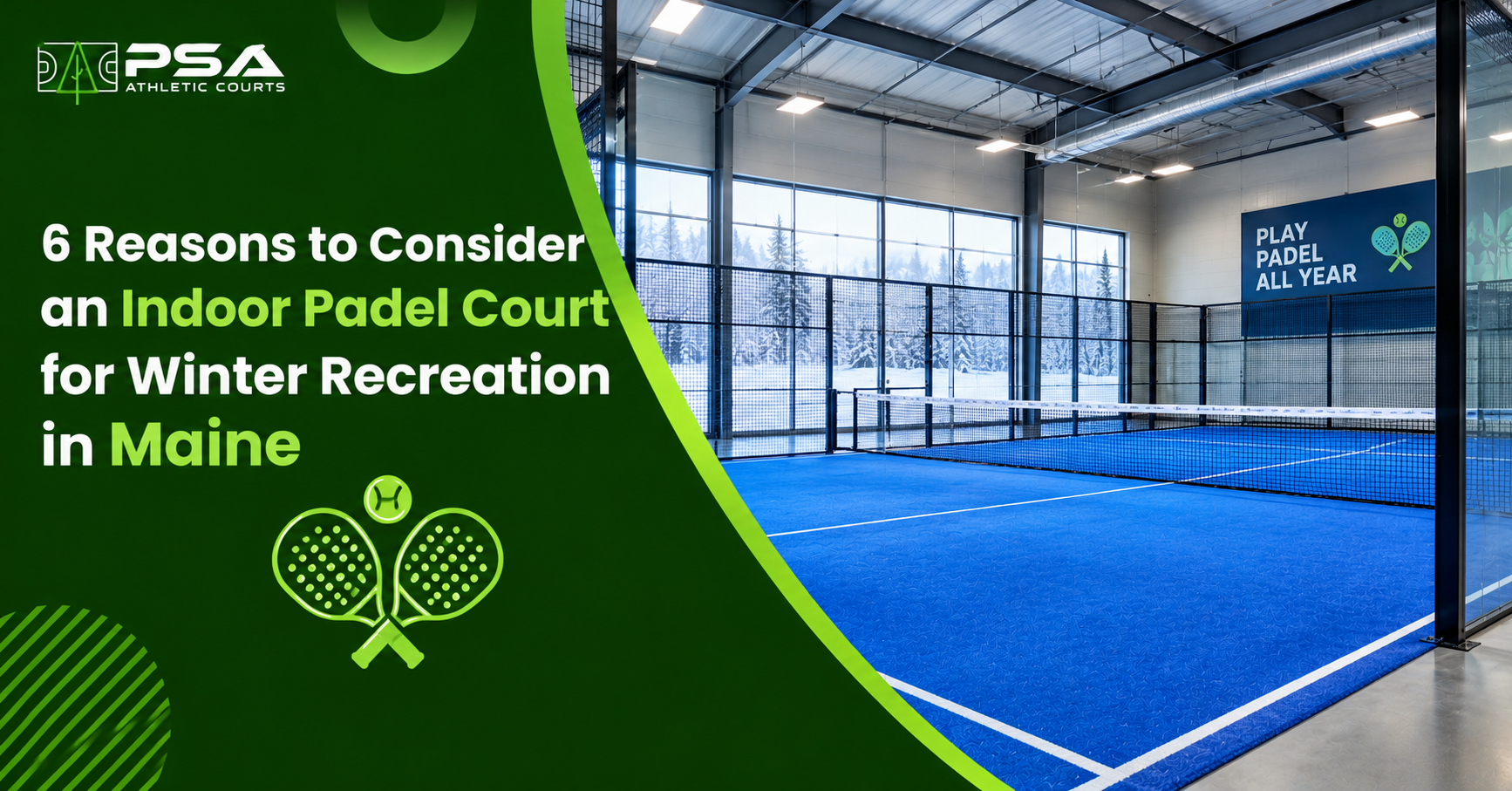
6 Reasons to Consider an Indoor Padel Court for Winter Recreation in Maine

Maine winters bring freezing temperatures, snowfall, and icy conditions that can limit outdoor sports activities for months. For sports clubs, recreation centers, schools, and facility owners, finding ways to keep people active throughout the colder season is essential. An indoor padel court offers a practical solution by providing a sheltered space for players to enjoy this fast-growing racquet sport year-round. With proper planning and construction, indoor padel facilities can support winter recreation while creating new opportunities for community engagement and sports participation.
1. Enjoy Padel Throughout the Winter Season
Cold temperatures and snow can make outdoor courts difficult to use in Maine. An indoor facility allows players to continue enjoying the sport without depending on favorable weather.
Key benefits include:
- Weather protection: Players can enjoy games without snow, rain, or icy court surfaces.
- Consistent scheduling: Clubs can organize regular matches, coaching sessions, and recreational programs.
- Year-round activity: Members have more opportunities to stay active during colder months.
Choosing a padel court indoor setup helps facilities maintain a more reliable playing schedule throughout winter.
2. Attract More Members to Your Sports Facility
Adding padel can help sports clubs and recreation centers appeal to people looking for new activities. Its doubles format encourages teamwork, making it suitable for beginners and experienced players alike.
An indoor court can help facilities:
- Attract families, young adults, and recreational athletes.
- Offer group lessons, leagues, and social playing sessions.
- Introduce membership packages that include court bookings and coaching.
These options can make padel an appealing addition to an existing sports facility.
3. Make Better Use of Indoor Sports Space
An indoor padel court can help facility owners expand their recreational offerings without relying entirely on outdoor space. However, the building must provide enough room for the court, safe movement, and suitable playing conditions.
Before planning the layout, consider:
- Available floor space and ceiling clearance.
- Player circulation and access around the court.
- Lighting, ventilation, and temperature control.
- Safe entry points and space for spectators, where appropriate.
Careful planning helps integrate padel into facilities designed for multiple recreational activities.
4. Plan for Reliable Indoor Padel Court Construction
Successful indoor padel court construction requires more than installing glass panels and artificial turf. The building, foundation, drainage considerations, and playing environment must all be evaluated before work begins.
Important planning steps include:
- Assessing the existing floor or proposed foundation.
- Selecting suitable turf and court components.
- Planning lighting and ventilation.
- Reviewing structural requirements and local building regulations.
Following a practical padel court construction guide can help owners understand the major decisions involved before committing to a project.
5. Create Opportunities for Commercial Sports Facilities
Padel can introduce new recreational programs and booking opportunities for businesses serving local communities. Well-planned indoor padel courts for commercial sports facilities can support memberships, private bookings, coaching, and organized leagues.
Potential opportunities include:
- Offering hourly court reservations.
- Hosting beginner sessions and group activities.
- Developing winter leagues and social events.
- Partnering with local schools, clubs, and community organizations.
Facility owners should evaluate local demand, operating expenses, and available space before deciding on a business model.
6. Support Active Communities During Maine Winters
Winter weather often reduces opportunities for outdoor recreation, making accessible indoor sports facilities particularly valuable. Padel provides a social activity that encourages movement, coordination, and friendly competition.
By investing in suitable indoor courts, communities can benefit from:
- More opportunities for regular physical activity.
- Social connections through group play.
- Recreational options for different skill levels.
- A welcoming destination during colder months.
Facilities can also explore complementary indoor courts activities to broaden their seasonal recreation programs.
Final Thoughts
An indoor padel court can offer Maine sports facilities a practical way to maintain recreational activity throughout winter. From attracting new members to supporting year-round programming, the benefits depend on thoughtful planning, suitable building conditions, and quality construction. Before starting a project, evaluate your available space, intended users, and long-term facility goals to determine whether indoor padel is the right investment for your community.
