
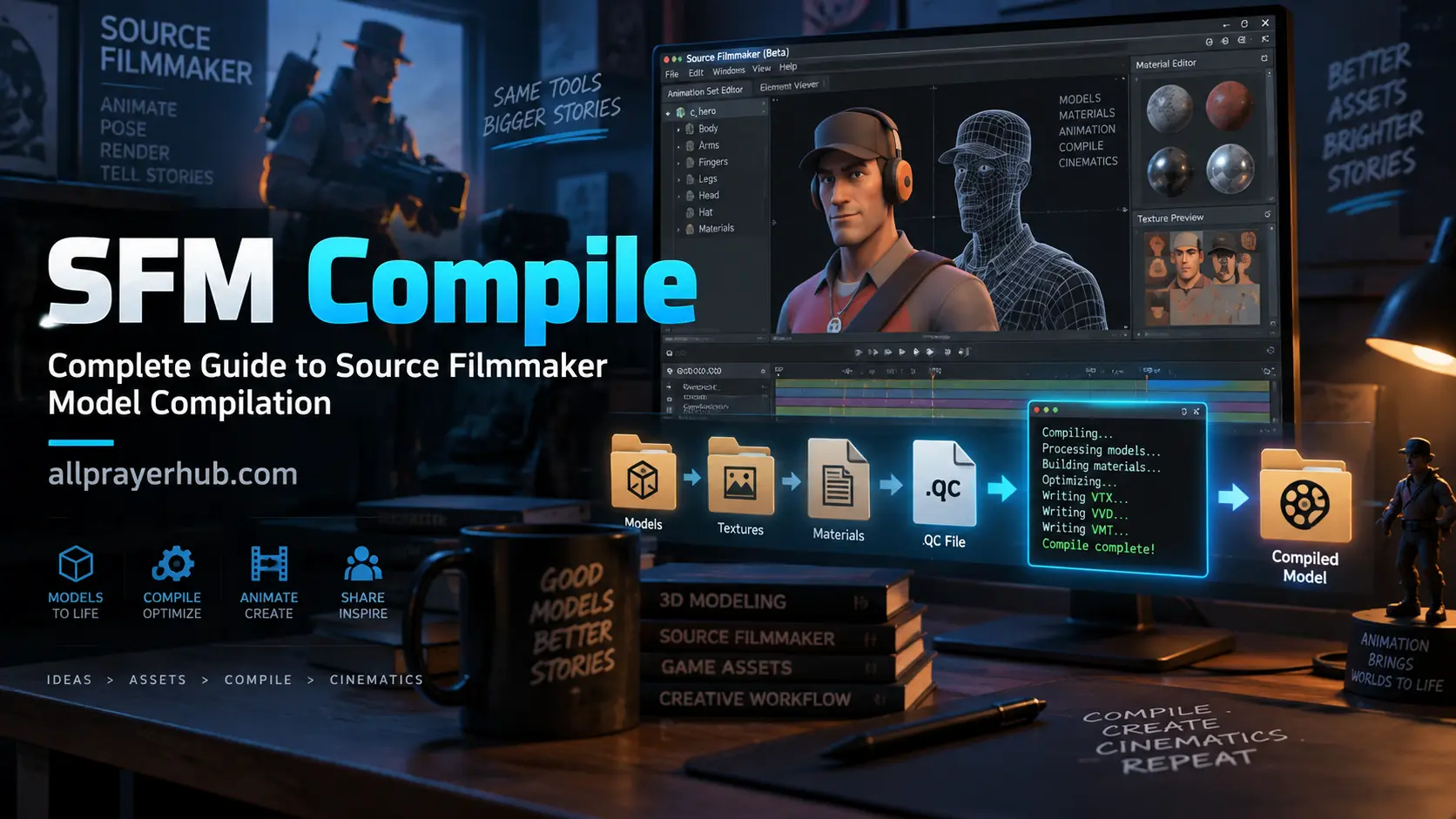
SFM Compile: Complete Guide to Compiling Models and Projects in Source Filmmaker

Source Filmmaker (SFM) is a powerful animation tool that allows creators to make videos, short films, game scenes, and animations using characters, objects, and environments from the Source engine. However, before custom models and assets can be used properly in SFM, they often need to go through a process called SFM compile.
SFM compile helps convert prepared 3D files into formats that Source Filmmaker can understand and use. Whether you are creating a custom character, importing a new object, or preparing game assets, understanding the compile process can make your workflow much easier.
In this guide, we will explain what SFM compile is, why it is important, how the workflow works, the tools you need, common problems, and useful tips for beginners and advanced users.
What Is SFM Compile?
SFM compile is the process of converting 3D models, animations, and related files into a format that works inside Source Filmmaker. A normal 3D model created in software like Blender cannot always be directly used in SFM. It needs to be prepared and compiled into Source engine formats.
During compilation, different files are combined and processed to create a usable SFM model.
For example, a creator may have:
- A 3D character model
- Textures and materials
- Animation data
- Physics information
The compile process combines these elements into a working model that SFM can load.
The Role of Compile in Source Filmmaker
Compile plays an important role in the SFM workflow because it allows creators to bring custom content into their projects. Source Filmmaker works with specific file formats, meaning that external models usually need additional preparation before they can be used.
Through compilation, creators can make sure that their models have:
- Correct textures and materials
- Proper animations
- Working character controls
- Compatible Source engine settings
- Better performance inside SFM
Without compilation, a custom model may fail to load, appear without textures, or have broken animations.
Compile vs Export: What Is the Difference?
Many beginners confuse exporting and compiling because both processes involve converting files. However, they serve different purposes.
Exporting usually happens when a creator saves a model from one software into another format. Compilation happens afterward when those files are converted into a format that Source Filmmaker can use.
| Process | Explanation |
|---|---|
| Export | Saves a model from software like Blender into a transferable format |
| Compile | Converts prepared files into Source engine-compatible files |
| Import | Adds the final compiled asset into Source Filmmaker |
For example, a creator may first create a model in Blender, export the required files, prepare a QC file, and then compile everything using a tool like Crowbar.
Why Is SFM Compile Important?
SFM compile is important because Source Filmmaker does not directly support every type of 3D model file. Assets created in other programs need to follow the rules and structure of the Source engine before they can work properly.
For creators who want to produce professional animations, custom videos, or unique scenes, compilation is an essential step. It allows them to move beyond the default SFM library and create content using their own models and designs.
Without proper compilation, many custom assets may have problems such as missing textures, incorrect animations, or models that do not appear inside SFM.
Making Models Usable in SFM
The main purpose of SFM compile is to make models usable inside Source Filmmaker. A raw 3D model contains the visual shape of an object or character, but it does not always contain the information required for animation.
Compilation prepares the model by adding important elements such as skeleton data, materials, and Source engine settings. This allows creators to place the model into scenes and control it properly.
For example, a character model needs working bones and animation controls before it can move naturally in an SFM scene.
Applying Textures and Animations
Textures and animations are important parts of any SFM project. A model without proper textures may appear plain or broken, while incorrect animation settings can make movement look unnatural.
During compilation, different files are connected together so the final model can display its correct appearance and support animations.
This allows creators to achieve:
- Realistic character appearances
- Smooth movements
- Proper material effects
- Better visual quality
Improving Source Engine Compatibility
Every game engine handles models differently. A file that works in Blender or another 3D program may not automatically work inside Source Filmmaker.
SFM compile solves this problem by converting assets into formats that match Source engine requirements. This improves compatibility and helps reduce technical issues when using custom content.
Benefits of SFM Compile
SFM compile provides several benefits for creators who want more control over their animation projects. It allows users to create and use custom assets instead of depending only on the models that come with Source Filmmaker.
Whether you are creating a simple animation or a large cinematic project, understanding compilation can improve your workflow and give you more creative options.
Support for Custom Models and Assets
One of the biggest benefits of SFM compile is the ability to use custom models. Creators can design their own characters, objects, environments, and other assets and bring them into Source Filmmaker.
This gives artists more freedom because they are not limited to the default content available in SFM. They can create unique scenes based on their own ideas and creative goals.
Better Animation Workflow
A properly compiled model usually provides a smoother animation experience. When bones, controls, and model settings are prepared correctly, creators can animate characters more easily.
This is especially useful for complex scenes where accurate movements, facial expressions, and character control are important.
Improved Performance and Optimization
Compilation also helps improve model organization and performance. Large or poorly prepared assets can slow down SFM projects, especially when multiple characters and objects are used in the same scene.
By using proper compile settings, creators can optimize their models while maintaining good visual quality.
More Creative Freedom
The biggest advantage of SFM compile is the creative freedom it provides. Instead of working only with existing assets, creators can develop their own collection of models and create original animations.
This makes SFM a more flexible platform for storytelling, filmmaking, and creative experimentation.
Also check out our SimplifyDiggs com Review to find out if it is a legitimate website or another unreliable online platform.
How Does SFM Compile Work?
The SFM compile process involves several steps that transform a basic 3D model into a complete Source Filmmaker asset. Each step is important because missing or incorrect information can cause problems later when the model is loaded inside SFM.
In general, the workflow starts with creating or preparing a 3D model, setting up textures and materials, creating a QC file, and finally running the compilation process through Source engine tools. Once the compilation is successful, the final model files can be added to SFM and used in animations.
Understanding this workflow helps creators avoid common mistakes and makes the entire process much easier. Instead of randomly trying different settings, users can follow a clear process to prepare their models correctly.
Preparing Your SFM Files
Before starting the compilation process, it is important to organize all required files properly. A clean and structured project folder can prevent many errors during compilation.
The preparation stage usually includes checking the model, textures, animations, and other related files. Creators should make sure that all files have correct names and are stored in the right locations.
Common files prepared before compilation include:
- 3D model files
- Texture files
- Material files
- Animation files
- QC files
- Physics information
A poorly organized project can create problems such as missing textures, incorrect file paths, or failed compilation. Spending time preparing files properly makes the later steps much easier.
Creating QC Files
A QC file is one of the most important parts of the SFM compile process. It works as an instruction file that tells the compiler how to build the final model.
The QC file contains information about different parts of the model, including where the model files are located, how animations should work, and which textures should be connected.
A QC file may include instructions for:
- Model name and location
- Texture paths
- Animation sequences
- Bone structure
- Physics settings
- Model options
Without a correct QC file, the compiler does not know how to process the model. Even a small mistake in the file can cause compilation errors.
For beginners, QC files may look confusing at first, but they become easier to understand with practice. Learning basic QC commands is an important skill for anyone who wants to create custom SFM models.
Setting Up Models and Textures
After preparing the basic files, the next step is setting up the model and textures correctly. This ensures that the final asset looks and works properly inside Source Filmmaker.
The model should have the correct structure, including properly connected bones, correct scaling, and working animations. Textures also need to be prepared in Source engine formats so that SFM can display them correctly.
Important things to check include:
- Correct texture paths
- Proper material connections
- Working model skeleton
- Correct model size
- Compatible file formats
A model may compile successfully but still have problems if textures or materials are not set up correctly. Careful preparation helps avoid visual issues after importing the model into SFM.
Running the Compile Process
Once everything is prepared, the final step is running the compilation process. This is where tools like Crowbar or StudioMDL take the prepared files and create the final Source engine model.
During compilation, the tool reads the QC file and processes all connected assets. If everything is configured correctly, it generates the required model files that Source Filmmaker can use.
After compilation is complete, creators should test the model inside SFM. Testing helps identify any remaining issues related to textures, animations, physics, or model behavior.
SFM Compile Tools You Need
Creating and compiling models for Source Filmmaker requires different tools for different tasks. Each tool has a specific purpose, from creating models to converting files into Source engine formats.
The right combination of tools can make the compile process faster and easier, especially for beginners who are learning how custom SFM assets are created.
| Tool | Purpose |
|---|---|
| Crowbar | Used for compiling and decompiling Source engine models |
| StudioMDL | Official Source engine model compiler |
| VTFEdit | Used for creating and editing Source texture files |
| Blender | Used for creating and preparing 3D models |
Crowbar
Crowbar is one of the most popular tools used by SFM creators. It provides a simple interface for compiling and decompiling Source engine models without requiring users to manually enter complicated commands.
Many beginners prefer Crowbar because it makes the compilation process easier to understand. It allows users to select their QC files, choose compiler settings, and start the process with fewer steps.
Crowbar is also useful for troubleshooting because it provides error messages when something goes wrong during compilation.
StudioMDL
StudioMDL is the main model compilation tool used by the Source engine. It processes QC files and converts model data into the final Source engine format.
Although StudioMDL is a powerful tool, beginners may find it more difficult because it is usually used through command-line instructions. However, understanding how StudioMDL works can help creators better understand the technical side of SFM compilation.
Many other tools, including Crowbar, work with StudioMDL in the background to simplify the process.
VTFEdit
VTFEdit is a useful tool for working with Source engine textures. Source Filmmaker uses specific texture formats, and VTFEdit helps creators convert and manage those files.
With VTFEdit, users can:
- Convert images into Source texture formats
- View texture files
- Edit texture settings
- Manage material-related files
Proper textures are important because even a perfectly compiled model will not look correct without properly prepared materials.
Blender
Blender is one of the most commonly used 3D modeling programs for preparing SFM assets. It allows creators to design characters, objects, and environments before moving them into the Source engine workflow.
Creators often use Blender for:
- Creating new models
- Editing existing models
- Setting up bones
- Preparing animations
- Exporting model files
Blender itself does not compile models for SFM, but it is an important part of the preparation stage before compilation.
Step by Step Guide to Compile a Model in SFM
Compiling a model for Source Filmmaker may seem complicated at first, but following a proper step-by-step process makes it much easier. Each stage prepares the model for the next step until it becomes a working SFM asset.
Step 1: Create and Edit Your Model
The first step is creating or editing the 3D model. This is usually done in software such as Blender, where creators can design characters, objects, or environments.
During this stage, focus on creating a clean model with proper structure. The model should have correct dimensions, connected parts, and a suitable design for animation.
Before moving forward, check:
- Model shape and quality
- Bone structure
- Animation setup
- Texture placement
A properly prepared model makes the compilation process much smoother.
Step 2: Prepare the QC File
After preparing the model, the next step is creating the QC file. This file provides instructions to the compiler about how the model should be built.
The QC file connects different elements together, including:
- Model files
- Textures
- Animations
- Physics settings
A correct QC file is essential because the compiler depends on it to create the final model.
Step 3: Compile the Model
Once the QC file and all required assets are ready, the model can be compiled using tools such as Crowbar or StudioMDL.
During this stage, the compiler processes the instructions and creates the final Source engine files.
If the process completes successfully, the model will be ready to use inside Source Filmmaker.
Step 4: Test Your Model in SFM
The final step is testing the compiled model inside Source Filmmaker. This helps confirm that everything works correctly.
Creators should check:
- Does the model appear correctly?
- Are textures visible?
- Do animations work?
- Are bones and controls functioning?
- Does the model behave properly?
Testing is important because some problems only appear after the model is loaded into SFM.
Fixing issues at this stage helps create a cleaner and more professional final result.
SFM Compile File Types
Understanding different file types is an important part of learning SFM compile. Every file used during the compilation process has a specific purpose, and knowing what each file does helps creators manage their projects more effectively.
Source Filmmaker uses a combination of model files, texture files, animation files, and instruction files to create a complete working asset. If one important file is missing or incorrectly configured, the final model may not work properly.
The most common file types used in SFM compilation include QC files, SMD files, DMX files, MDL files, and texture files such as VTF and VMT.
| File Type | Purpose |
|---|---|
| QC File | Contains instructions used during the compilation process |
| SMD File | Stores model geometry, skeleton, and animation information |
| DMX File | Stores Source engine model and animation data |
| MDL File | Final compiled model file used by SFM |
| VTF/VMT Files | Store textures and material information |
QC Files
QC files are considered the main instruction files in the SFM compile process. They tell the compiler how to create the final model and how different parts of the asset should be connected.
A QC file can define important information such as:
- Model location
- Texture paths
- Animation sequences
- Bone structure
- Physics settings
- Model options
Without a properly written QC file, the compiler cannot understand how to process the model. Even a small mistake, such as an incorrect file path or missing command, can stop the compilation process.
For this reason, learning basic QC file editing is one of the most useful skills for anyone who wants to create custom Source Filmmaker assets.
SMD Files
SMD files are commonly used to store model and animation information for Source engine projects. They can contain the geometry of a model, its skeleton structure, and animation data.
During the preparation stage, creators often export models from 3D software into SMD format before compiling them for SFM.
SMD files help the compiler understand:
- The shape of the model
- Position of bones
- Animation movements
- Vertex information
Although newer workflows may use other formats, SMD files remain an important part of many SFM compile projects.
DMX Files
DMX files are another format used in Source engine workflows. They can store more advanced information about models, animations, and other asset data.
Compared to older formats, DMX can handle more complex information and is commonly used in modern Source engine tools.
Creators may use DMX files when working with advanced animation setups or projects that require more detailed data management.
MDL Files
MDL files are the final compiled model files created after the compilation process is completed successfully.
These are the files that Source Filmmaker loads when you add a model into your project.
A completed MDL file contains the information required for SFM to display and control the model, including:
- Model structure
- Materials
- Animation support
- Bone information
If the compile process works correctly, the generated MDL file becomes the usable version of your custom model.
VTF and VMT Texture Files
Textures are what give models their visual appearance. Source Filmmaker uses VTF and VMT files to handle textures and materials.
VTF files store the actual image data, while VMT files contain material instructions that tell the Source engine how the texture should appear.
These files control things like:
- Colors
- Surface details
- Reflections
- Transparency effects
Proper texture setup is essential because a model can compile successfully but still look incorrect if its materials are missing or incorrectly configured.
Advanced SFM Compile Techniques
Once creators understand the basic SFM compile workflow, they can explore more advanced techniques to improve their projects. These methods are mainly used by experienced users who work on larger animations, custom characters, or complex scenes.
Advanced compilation techniques can help save time, improve performance, and create more realistic results.
Batch Compiling
Batch compiling is a technique that allows creators to compile multiple models or assets at the same time instead of processing each one individually.
This is especially useful for large projects where many models need to be updated or tested. Instead of opening each QC file separately, creators can automate the process and save significant time.
Benefits of batch compiling include:
- Faster workflow
- Less repetitive work
- Easier management of large projects
- Improved productivity
For creators working on animation series or large asset collections, batch compiling can make the entire process much more efficient.
Custom Physics and LOD
Custom physics and Level of Detail (LOD) settings are important for improving the performance of SFM projects.
Physics settings control how objects behave inside scenes, such as how they move, react, or interact with other objects. Proper physics setup can make animations feel more realistic.
LOD allows creators to use different versions of a model depending on the distance from the camera. A detailed model can be used for close shots, while simpler versions can improve performance in background scenes.
Using custom physics and LOD helps maintain visual quality while keeping projects easier to manage.
Motion Capture Integration
Motion capture integration allows creators to use real-world movements and apply them to digital characters.
Instead of manually creating every movement, motion capture data can provide more natural animation results. After the model is prepared and compiled correctly, motion data can be applied to create realistic character actions.
This technique is commonly used for:
- Character animations
- Action scenes
- Realistic movements
- Cinematic projects
For advanced SFM creators, combining compiled models with motion capture can greatly improve animation quality.
Scripting and Automation
Scripting and automation help reduce repetitive tasks during the SFM workflow. When working with many assets, manually repeating the same steps can take a lot of time.
Scripts can help automate tasks such as:
- File organization
- Batch processing
- Repeated compile actions
- Project management
Automation is especially useful for creators who work on multiple projects or regularly update large collections of custom assets.
Common SFM Compile Problems and Solutions
Even experienced creators can face problems during the SFM compile process. Most errors happen because of incorrect file paths, missing files, incorrect QC settings, or incompatible formats.
Understanding common problems and their solutions can save time and help creators fix issues quickly.
Missing Texture Errors
One of the most common SFM compile problems is missing textures. This happens when the model loads correctly but appears without colors, details, or materials.
Common causes include:
- Incorrect texture paths
- Missing VTF files
- Incorrect VMT settings
- Wrong file names
To fix this issue:
- Check that all texture files exist
- Confirm that file paths are correct
- Make sure materials are properly connected
Proper texture organization before compilation can prevent many of these problems.
QC File Errors
QC file mistakes are another common reason why compilation fails. Since the QC file controls the compilation instructions, even a small error can stop the entire process.
Common QC problems include:
- Incorrect commands
- Wrong file locations
- Missing model references
- Typing mistakes
The best solution is to carefully review the QC file and compare all paths and commands with the actual project files.
StudioMDL Compilation Failed
Sometimes StudioMDL may stop during the compilation process and show an error message.
This usually happens because:
- Required files are missing
- The model format is incorrect
- QC instructions are not valid
- The asset structure is incomplete
Reading the error message carefully usually provides clues about what needs to be fixed.
Model Not Appearing in SFM
A model may compile successfully but still not appear inside Source Filmmaker. This can happen because the files are placed in the wrong location or SFM cannot find the model.
Possible solutions include:
- Check installation folders
- Confirm model paths
- Restart Source Filmmaker
- Verify file names
Proper installation after compilation is just as important as the compilation itself.
SFM Compile vs Decompile: What’s The Difference?
SFM compile and decompile are two opposite processes used when working with Source engine models. While compiling creates a usable model from source files, decompiling works in the reverse direction by converting a compiled model back into editable files.
Understanding the difference between these two processes is important for creators who want to build new assets or modify existing ones.
| Process | Description |
|---|---|
| Compile | Converts prepared model files into a usable Source engine model |
| Decompile | Converts an existing compiled model back into editable files |
SFM Compile
SFM compile is used when creating a new model or preparing a custom asset for Source Filmmaker. The process takes files such as models, textures, animations, and QC instructions and turns them into a working SFM asset.
Creators usually compile models when they want to:
- Add custom characters to SFM
- Create new objects or environments
- Prepare assets from Blender or other 3D software
- Build unique animation projects
The final result is a model that Source Filmmaker can load and use.
SFM Decompile
Decompiling is the opposite process. It takes an already compiled model and attempts to extract editable information from it.
Creators may use decompiling when they want to:
- Study how an existing model was created
- Modify an existing asset
- Convert old models into editable formats
However, decompiling does not always recover every original detail. Some information may be lost during the original compilation process.
SFM Compile vs Other Animation Pipelines
SFM compile is different from workflows used in other animation programs. While tools like Blender and Maya focus on creating and editing 3D content, SFM compile focuses on preparing assets specifically for the Source engine.
Each animation pipeline has its own strengths and purpose. Understanding these differences helps creators choose the right tools for their projects.
SFM Compile vs Blender Workflow
Blender is one of the most popular 3D creation tools available today. It is mainly used for modeling, rigging, texturing, and animation.
The Blender workflow usually focuses on creating the asset itself, while SFM compile focuses on making that asset compatible with Source Filmmaker.
A common workflow looks like this:
- Create or edit a model in Blender
- Prepare textures and materials
- Export the required files
- Create a QC file
- Compile the model for SFM
Blender provides more freedom for creating detailed models, while SFM provides a faster environment for animation and cinematic scenes.
SFM Compile vs Maya Pipeline
Maya is another professional 3D software widely used in the animation industry. It is commonly used for movies, games, and advanced character animation.
Compared to Maya, SFM is more focused on Source engine-based projects and game-style animations.
Maya offers advanced professional tools, but SFM provides an easier way for creators who want to make cinematic content using Source engine assets.
The choice depends on the creator’s goals:
- Use Maya for professional 3D production
- Use Blender for flexible modeling and editing
- Use SFM for Source engine animations and storytelling
SFM Compile in The Animation Community
SFM compile has become an important part of the Source Filmmaker community. Many creators use it to expand the possibilities of SFM and create content beyond the default assets provided by Valve.
The ability to compile custom models has allowed artists to create unique animations, fan videos, and creative projects based on their own ideas.
The SFM community uses compiled assets for:
- Short films
- Character animations
- Game-related videos
- Fan-made content
- Cinematic scenes
Custom models have helped many creators develop their own style and produce more original work.
How Creators Use SFM Compile
Creators use SFM compile in different ways depending on their projects. Some may create a completely new character, while others modify existing assets to fit a specific animation idea.
For example, an animator may create a custom character in Blender, prepare the textures, compile the model, and then use it inside SFM to create a cinematic scene.
This workflow gives creators more control over their storytelling and visual style.
SFM Compile For Beginners
For beginners, SFM compile may seem difficult because it involves different tools, file types, and technical steps. However, learning the basics slowly makes the process much easier.
New users should focus on understanding the purpose of each step instead of trying to master everything at once.
A good learning path is:
- Learn basic Source Filmmaker usage
- Understand model and texture files
- Learn basic Blender preparation
- Understand QC files
- Practice simple compilation projects
Starting with small projects helps beginners build confidence before moving to more advanced models.
Common Mistakes Beginners Should Avoid
Many new users face similar problems when learning SFM compile. Avoiding these mistakes can make the learning process faster.
Common beginner mistakes include:
- Ignoring file organization
- Using incorrect file paths
- Skipping texture preparation
- Changing too many settings without understanding them
- Not testing models after compilation
Keeping projects organized and following a step-by-step workflow can prevent many unnecessary problems.
Helpful Tips For Learning SFM Compile
Beginners can improve faster by practicing regularly and learning from existing projects.
Useful tips include:
- Start with simple models
- Study working QC files
- Keep backup copies
- Test changes one at a time
- Learn basic troubleshooting
Over time, understanding the workflow becomes natural, and creating custom SFM assets becomes much easier.
Best Practices For Successful SFM Compilation
Following good practices can make the compilation process smoother and reduce technical issues. A well organized workflow saves time and improves the quality of final results.
Keep Files Organized
Proper file organization is one of the most important habits for SFM creators. Keeping models, textures, animations, and project files in clear folders makes troubleshooting much easier.
Good organization helps prevent:
- Missing files
- Incorrect paths
- Confusing project structures
Use Correct Naming
File names should be simple, clear, and consistent. Incorrect naming can create problems because Source engine tools depend heavily on accurate file paths.
Avoid unnecessary spaces and complicated names that may cause errors.
Test Models Regularly
Do not wait until the end of a project to test your model. Regular testing helps identify problems early.
Testing after each major step allows creators to quickly find and fix issues.
Optimize Models and Textures
Large models with unnecessary details can slow down SFM projects. Proper optimization helps maintain good performance while keeping the visual quality strong.
Frequently Asked Questions About SFM Compile
What Does Compile Mean in SFM?
Compile in SFM means converting prepared model files into Source engine-compatible files that can be used inside Source Filmmaker. It combines different elements such as models, textures, animations, and settings into a working asset.
How Long Does SFM Compile Take?
The time required for SFM compile depends on the size and complexity of the model. Simple models may compile within seconds, while larger models with detailed textures and animations can take longer.
Computer performance and project size also affect compilation speed.
Can I Compile Custom Models For SFM?
Yes, you can compile custom models for SFM. Many creators use software like Blender to create models and tools like Crowbar and StudioMDL to prepare them for Source Filmmaker.
Custom compilation allows creators to add unique characters, objects, and environments to their projects.
What Tools Are Used For SFM Compilation?
The most common tools used for SFM compilation include:
- Crowbar
- StudioMDL
- VTFEdit
- Blender
Each tool has a different role, from creating models to preparing textures and compiling final assets.
Why Is My SFM Compile Failing?
SFM compile failures usually happen because of missing files, incorrect QC settings, wrong file paths, or incompatible formats.
Checking error messages, reviewing QC files, and verifying asset locations are the best ways to identify and fix problems.
Conclusion: Mastering SFM Compile For Better SFM Projects
SFM compile is an essential skill for anyone who wants to create custom content in Source Filmmaker. It allows creators to transform their own models, textures, and animations into usable assets for cinematic projects.
Although the process may look complicated at first, understanding the basic workflow makes it much easier. Learning about QC files, compile tools, file types, and troubleshooting methods helps creators avoid common problems and improve their results.
Whether you are a beginner making your first custom model or an experienced animator working on advanced projects, mastering SFM compile gives you more creative control and opens new possibilities inside Source Filmmaker.
